Lesson Planning and Why It Matters
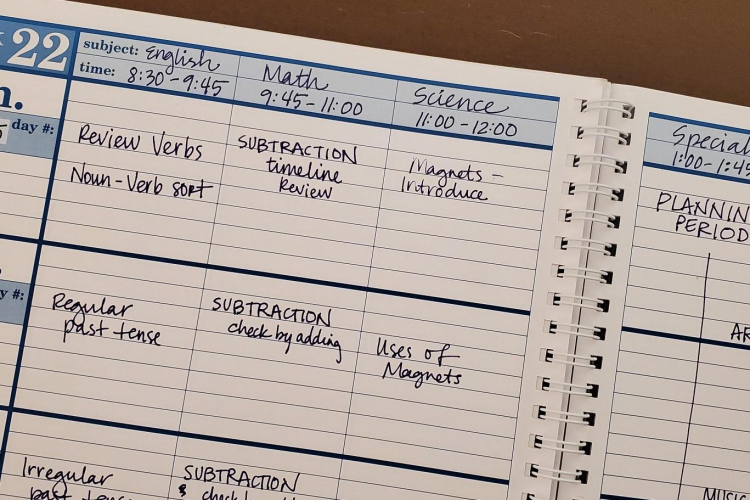
I have been thinking about how more preparation prior to a class session can influence what happens during that session. When we encounter a difficult situation related to discipline, planning is probably not the first thing that comes to mind. We probably think first about classroom procedures, rules, and expectations.
A well-planned lesson does not mean that there will never be behavioural problems. “The perfectly planned class” does not exist. There are always unexpected questions, challenging days, distractions and students who are struggling with issues that we may not even know about. However, when I am more intentional and put effort into my planning, I create a better environment for my students to be ready to learn and to develop better habits.
For me, lesson planning is not only about asking “What am I going to teach today, next week?” but also asking “What do I want my students to do with all that they are learning?”
Preparation is part of faithful teaching
As Christian teachers, preparation is more than a professional responsibility; it is a service to our students and their families. Some Bible verses that come to mind for this are: “Each of you should use whatever gift you have received to serve others, as faithful stewards of God’s grace in its various forms” (1 Peter 4:10, NIV).[1] Proverbs 21:5 says, “The plans of the diligent lead surely to abundance” (ESV).[2] Paul also reminds us in Colossians 3:23, “Whatever you do, work heartily, as for the Lord and not for men” (ESV).
These verses push me to be more intentional in my lesson planning, not just because my school expects it from me – I am preparing because my students deserve a teacher who has thought carefully about how to use the time they have been given wisely.
When preparing a lesson, I try to keep several things in mind: What we will be doing? Where will we encounter struggles? Where they might lose interest? Is there enough time and variety? How can I get them to participate? What will they do if they finish early? What kind of meaningful activities will I have for those early finishers and how will I transition from one activity to another?
When students are confused or bored, or they feel like the activity is beyond their level, or they are unsure what they are supposed to be doing, behavioural problems can appear very quickly. Good planning does not excuse inappropriate behaviour, but it can help to anticipate it and even to prevent it.
Plan to learn, and not just for the content
One useful tool when planning is Bloom’s Taxonomy. I do not necessarily use every level in every lesson; however, keeping this in mind helps me to move from just asking students to remember information but to retain, explain, analyse and even create new things with the information I am giving them.
From bottom to top, Bloom’s taxonomy levels are:
- Remembering: What do I want my students to remember?
- Understanding: Can they explain what they have learned in their own words?
- Applying: How can they apply what they have learned in a real-life situation?
- Analysing: How can they break apart ideas and find new points of view?
- Evaluating: How will they justify their decisions and how can they reframe their ideas when needed?
- Creating: What can they make new using the knowledge they have now.
Students who are more engaged and actively working have fewer opportunities to engage in behaviours I don’t want in my classroom, and, more importantly, they are practising active listening, thinking, asking questions, solving problems, cooperating and taking responsibility for their own learning. These are habits we want our students to develop, not only for the classroom, but as life skills.
My last five minutes
One of the practices my students know will happen in our room is what I call “the exit ticket.” Sometimes I hand out a paper, or I just simply ask them three questions:
- What is one thing that you remember from today’s lesson?
- What is one question you want me to answer tomorrow about this lesson?
- What is one thing you would say to your parents or friends if they ask you about today’s lesson?
I like this practice because it makes the students stop and think about what actually happened during the lesson and keeps them on track throughout. They are more keen to participate, take notes, and recall as much information as possible.
The first question brings them back to their knowledge, the second gives me information on what they need to work on a bit more, and the third invites them to share this information and explain it in their own words.
 By implementing this practice in most of my lessons, I can return to some of their questions, and the previous lesson won’t simply disappear when the bell rings. The students have something to bring for the next class. It is a simple practice, but it helps me see whether my planning is resulting in actual learning and also helps the students to develop the habit of reflection.
Planning for the person behind the behaviour
There is another part of lesson planning that I have learned as I develop more experience: we need to remember that there is always a person behind the behaviour.
When planning our lessons, we often focus on activities, objectives, materials and timing. But I am learning that planning also means thinking of the students in front of us, and creating opportunities, even through simple activities or conversations to get to know them better.
An activity that works well for most ages that sometimes I use is “How I learn best.” This works great especially for the beginning of the year when I am still new to my students. I give the statement, “I learn best when…” and have them write and share different ways they like to learn. They might say “when I hear an explanation,” “when I take notes,” “when I try it myself.” Their responses give you practical information and guidance on how to teach them.
A few years back I had the opportunity to practice this skill. I encountered a difficult situation in class, when, after some weeks of conversations, I learned some of the difficulties my student was going through.
We talked about how God is glorified in those situations, even when we don’t understand yet, and how He can use them for His Glory to bring other people closer to Him. I saw changes in this student’s behaviour, but more importantly, I saw trust growing.
This experience reminded me that discipline is not just about correcting specific behavior, but it is also about seeing and understanding the person behind the behavior who is making that choice.
Of course, this does not mean ignoring the wrong behaviour; students still need boundaries, guidance, and consequences. But when we try to know our students better, we may respond in a different way. We may discover that the disrespectful person is actually struggling, the student who does not want to participate might be afraid of failing, and the kid who is constantly interrupting might be looking to get noticed.
We won’t know all about what is in our students’ hearts, but we can choose to become interested enough to ask. In the book of Proverbs, it says, “The purposes of a person's heart are like deep waters, but one who has insight draws them out” Proverbs 20:5 (NIV).
There is no perfect lesson plan
Lesson plans should not be a source of guilt for teachers.
There are days when we plan a lesson carefully and everything seems to go wrong … an activity that takes longer than expected, technology is down for the day, students come tired or over-distracted, an unexpected conversation changes your day, or even a simple headache. Life happens.
When I do my best to prepare well, I feel more capable of facing the unexpected situations that I might encounter during the day. I know what my main goal is, so even if I change an activity, I will still move towards that goal. Preparation gives us structure and also can give us freedom.
When I am unprepared, I am more likely to become frustrated when students do not respond the way I am expecting. When I know where my lesson is going, I can spend more energy on listening to my students, and less energy trying to figure out what I am doing next. The book of James reminds me to “Be quick to listen, slow to speak, and slow to become angry” (NIV).
Planning with the heart in mind
I currently teach at Bucharest Christian Academy in Romania. Alongside my school responsibilities, I teach Spanish in other local language learning centres for Romanians. I also offer flute lessons, the Spanish Club, and, more recently I have started a Chapel Dance Club after school for students and sometimes teachers who are interested. Also, I come from other cross-cultural teaching experiences. These different settings taught me that students, no matter their background and age, learn in many different ways, and that relationships are an important part of the learning process.
For me, good lesson planning is ultimately about more than having a productive class. It is about creating opportunities for students to learn, participate, reflect, practice responsibility, and develop habits that will shape who they become.
Before I sit to plan my weekly lesson, I think not only about the content, but about the students I will be having in front of me.
- What do I want them to remember?
- What do I want them to understand?
- How can they apply it?
- Where can they analyse, reflect, create?
- And even, what kind of habits I am helping them practice through this lesson?
Students are learning much more than just geography, history, or math. They are learning how 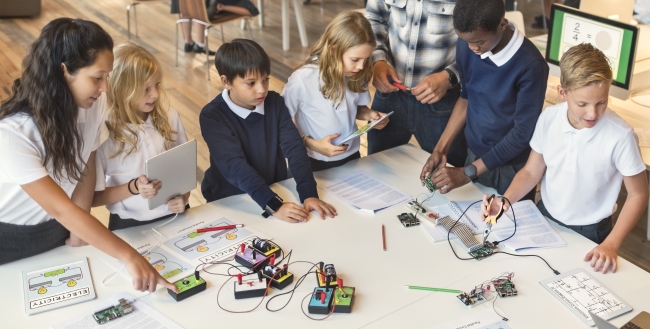 to respond when something is difficult and frustrating, how to work with others, how to receive corrections, how to ask for help, and how to persevere when they do not immediately succeed. We prepare the lesson, we establish routines, we anticipate difficulties, we create meaningful activities, we correct when necessary, we build relationships, and we try again when something does not work.
Ultimately we have to remember that we are not the ones who change our students’ hearts. That work belongs to God. Our responsibility is to be faithful with what He has placed in our hands, and sometimes that faithfulness starts with something as ordinary as sitting down, opening our books and guides and asking, “How can I prepare well for the students that God is bringing into my classroom tomorrow/next week?”
Ruth Alfonzo has been serving at Bucharest Christian Academy in Romania for the last five years. Previously, she taught in Cambodia, Argentina, and Panama, serving as a language teacher for both elementary and secondary schools in each place. Ruth enjoys the opportunity to teach in different settings and values seeing students grow not only academically, but in confidence, responsibility, and character.
[1] Scripture quotations marked NIV are taken from The Holy Bible, New International Version® NIV® Copyright © 1973, 1978, 1984, 2011 by Biblica, Inc. Used with permission. All rights reserved worldwide.
[2] Scripture quotations marked ESV are from the ESV® Bible (The Holy Bible, English Standard Version®), © 2001 by Crossway, a publishing ministry of Good News Publishers. ESV Text Edition: 2025. The ESV text may not be quoted in any publication made available to the public by a Creative Commons license. The ESV may not be translated in whole or in part into any other language. Used by permission. All rights reserved.
Photo Credits
Lesson Planning. E. Burnham. Resized.
Writing. Matthew Henry, from Burst. Resized.
Experiment Observation. Shutterstock. Resized.
How many students will your gift reach today?
Every $75 reaches one student. Today, double matching funds help you reach three.
Not ready to give today? Make a pledge

Your Next Chapter
Stories like this start with
someone saying yes.
Every roof, every classroom, every friendship begin when one person decides to step beyond. We'd love to walk with you as you conside what that might look like.
Related Stories